
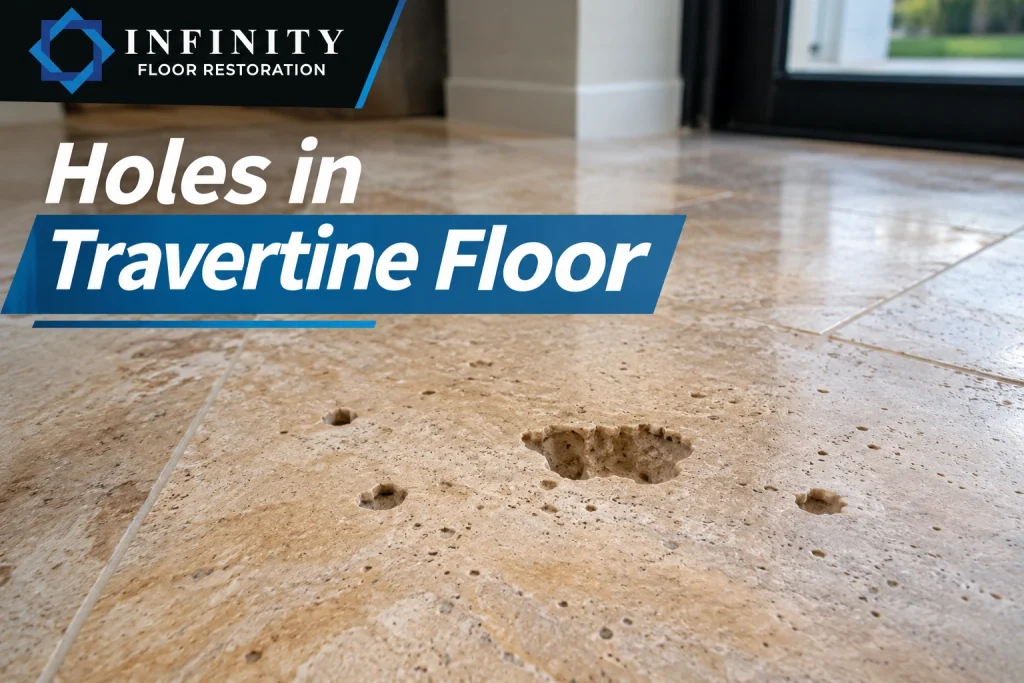
You’re mopping the hallway when the cloth catches on a little pit that definitely wasn’t there last summer. Then you spot two more near the kitchen bench, and your heart sinks.
Holes in travertine floor tiles are among the most common problems we’re called out for across Perth, and they’re rarely as serious as they look. Most come from natural voids breaking through the surface, factory filler wearing loose, or everyday wear and tear. In most homes we visit, the tiles can be filled and restored without lifting a single one.
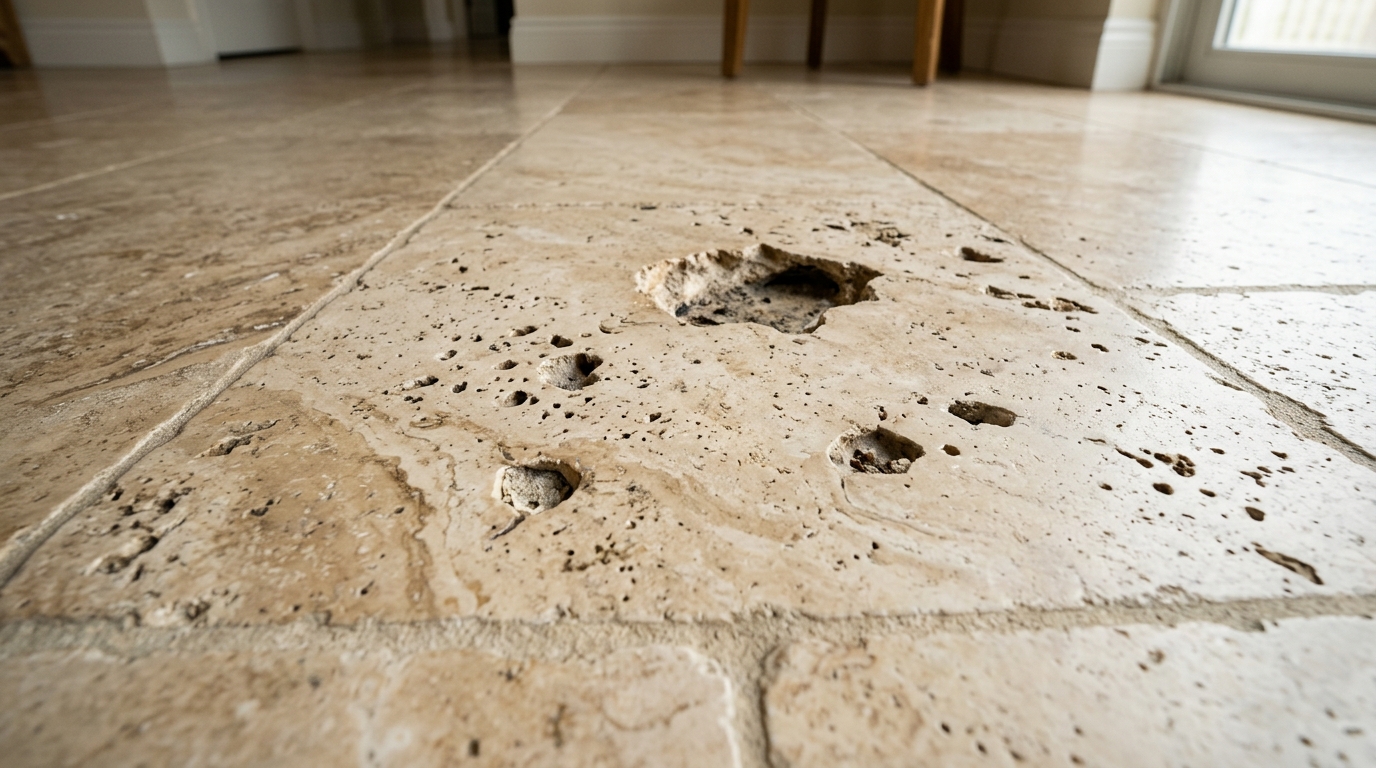
Why Holes in Travertine Floor Tiles Appear: 5 Common Causes
Holes appear when hidden voids inside the stone break through the surface, or when the filler packed into existing voids comes loose. Grit, knocks, and the wrong cleaners speed up both.
Natural cavities within the stone
Travertine forms around mineral hot springs. As calcium carbonate builds up in layers, escaping gas bubbles leave pores and cavities right through the stone, a bit like a honeycomb.
Some voids sit just a millimetre or two below the face, completely hidden on installation day. The Natural Stone Institute calls the first months of a new floor a break-in period, when many shallow travertine holes open up before the rate slows. New holes in a new floor are normal. Holes that keep multiplying after the first year deserve a closer look.
Factory filler cracking or coming out
Most indoor travertine is sold as filled travertine. At the factory, surface holes are packed with cement-based or resin filler, then honed (ground smooth with diamond pads) or polished flush.
Cement fill is softer than the stone around it, so over time it can shrink, turn chalky or lose its grip. That leaves a shallow divot with crisp edges, the telltale sign of travertine filler coming out.
Everyday foot traffic and surface wear
Grit on your shoes works like sandpaper. Every step shaves off a fraction of the surface until the thin skin over a hidden void gives way, especially in hallways, kitchens and patio doorways.
Beach sand and sandy Perth backyards make this noticeably worse. Stiff brushes and high-pressure hoses can also prise loose filler out.
Impact from heavy objects
A dropped cast iron pan, a dumbbell or a dragged sofa leg can chip the rim of a void and turn a pinhole into a crater. Impact damage usually looks jagged rather than round, and it tends to cluster around benches, home gyms and furniture.
Harsh cleaning products damaging the surface
Travertine is a calcium-based stone, so vinegar, lemon juice and many bathroom sprays etch it, leaving dull, rough patches. Repeated etching weakens the edges around pores and eats into cement fill, which makes travertine pitting spread faster.
Less often, moisture and movement are involved. Water moving beneath outdoor or pool area tiles, underfloor heating cycles or a shifting subfloor can all loosen fill and stress the stone, particularly when cracks appear alongside the holes.
Natural Pores vs Missing Filler: Spotting the Difference
Natural pores are small, irregular and spread fairly evenly across unfilled or tumbled stone. Missing filler leaves a smooth hollow with crisp edges on a honed or polished tile, often with traces of old fill on the sides.
We use these same clues when we assess a floor on site.
What you see | What it usually means | Next step |
Small open pores across rustic tiles with rounded edges | Normal texture of unfilled or tumbled travertine | Leave it, or fill it if dirt keeps collecting |
Smooth hollows on a honed or polished tile, with a faint ring of old fill | Factory fill has come out | Clean out thoroughly and refill |
Fill that looks cracked, chalky or sunken | Fill is breaking down and close to dropping out | Refill before the edges start chipping |
A sharp-edged hole in stone that looked solid | A hidden void has broken through | Fill it and watch the nearby tiles for a few months |
Hairline cracks, a drum-like (hollow) sound or a rocking tile | The tile has lost its bond, or the subfloor is moving | Assess before filling, because filler only hides this |
Tap around the hole with a coin. A crisp click means the tile is well bonded, while a dull, hollow note suggests it’s drummy. If you’re still unsure → hold off on DIY filling until the floor has been properly assessed.
Filling or Replacing: Your Travertine Repair Options
When a tile is solid and firmly bonded, filling is almost always the better choice. Replacement only comes into play when tiles are cracked through, drummy or badly broken.
Filling holes in travertine tiles works well for:
- Scattered pits and voids on otherwise sound tiles
- Patches of missing fill spread across a room
- Shallow chips and dents from wear or dropped objects
Replacement is worth discussing when:
- A tile is cracked right through or broken into pieces
- Tiles sound hollow or move underfoot
- The damage runs too deep for filler to hold
Many homeowners are caught off guard by the fact that new tiles rarely match an aged floor. Travertine varies between quarries and batches, and your existing tiles have mellowed with years of light and traffic. A few fresh tiles can stick out like a sore thumb, often more than a well-executed repair would.
Cost depends on floor size, how many holes need attention, whether grinding is required and the finish you want. Our breakdown of travertine restoration costs explains each factor in plain terms.
Professional Travertine Hole Repair and Restoration
Professional repair cleans each hole back to sound stone, fills it with a material suited to its size, then levels the surface so the fill sits flush. After more than 15 years of restoring stone floors across Perth, we’ve learnt that the fill is only as good as the prep underneath it.
Cleaning and preparing the damaged areas
Holes collect dirt, old sealer, cleaning residue and crumbs of failed fill. New filler won’t bond to any of it, and filler placed over leftover factory resin often pops out within weeks.
Each hole needs to be raked out, deep cleaned and dried thoroughly. Very shallow holes are often opened slightly too, so the filler has more surface to grip instead of sitting on top like a scab.
Filling holes with colour-matched material
Small pits can take a cementitious filler. Larger voids generally need a resin filler, such as a two-part epoxy or polyester that cures hard and handles foot traffic far better. The filler is tinted to sit within your stone’s natural tones.
Hardware store kits can handle one or two tiny pinholes. On honed or polished stone, though, a DIY travertine tile hole repair often leaves a dull swipe mark, patchy colour or fill sitting proud. Our travertine repair and restoration service treats filling, chips and cracks as one job, so the finish stays consistent from wall to wall.
Grinding, honing and polishing the surface
When holes are widespread, spot filling can leave a patchwork look, so filling is built into the restoration itself:
- Grinding takes back a fine layer of stone to remove lippage (uneven tile edges) and deep scratches
- Filling follows the first grinding passes, because grinding exposes voids sitting just below the surface
- Honing and polishing bring the fill flush and deliver a matte, satin or gloss finish
Our technicians use Italian-engineered Klindex machines with diamond pads. A restoration that includes filling usually takes around two to three days.
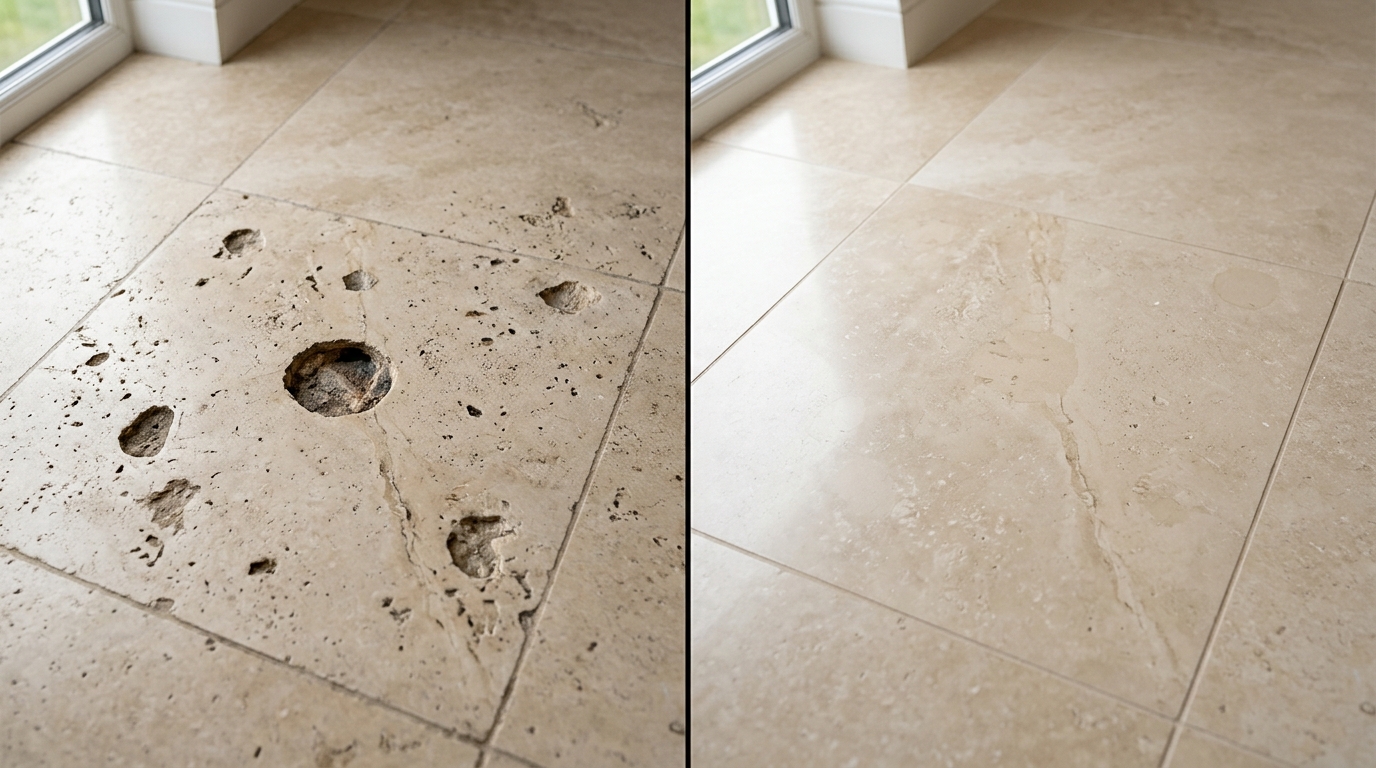
What to Expect from Colour Matching
A good repair blends in at normal standing distance, but no filler can copy every vein and fleck in natural stone.
Travertine combines creamy bases, walnut veins and tiny mineral speckles. Filler is tinted to sit within those tones rather than replicate each one. Light matters too, because low winter sun raking across the floor can reveal repairs you’d never notice at midday. Fills also tend to show more on polished stone than on a honed finish.
On a larger job, ask for a small test area first so you can judge the match before the whole floor is done.
Why Filled Holes Sometimes Reappear
Repaired holes usually reopen because of poor preparation, the wrong filler for the hole size, or sealing before the filler fully cured. Sometimes the old repair hasn’t failed at all, and a neighbouring void has broken through.
The usual culprits are:
- Dirt, sealer or old resin left in the hole → the filler can’t bond and pops out
- Cement fill in a large void → it shrinks, cracks and loosens
- Porous stone pulling moisture from cement filler as it sets → a weak, crumbly repair
- Ongoing wear → a fresh void opens a few centimetres away
If the same spot keeps failing, another round of filler is only a band-aid. Something underneath needs attention, and an inspection will tell you far more than another tub of filler.
Aftercare for Repaired Travertine Floors
Protect your repairs with gentle cleaning, less grit and a quality sealer applied once the filler has fully cured.
- Clean with a pH-neutral stone cleaner and a soft mop
- Avoid vinegar, bleach and acidic bathroom sprays
- Place mats at outside doors and sweep up grit often
- Fit felt pads under chair and table legs
Restore Your Travertine Floor with Infinity Flooring
Noticing new pits, holes or filler crumbling out of your tiles? Let us take a look before small problems spread.
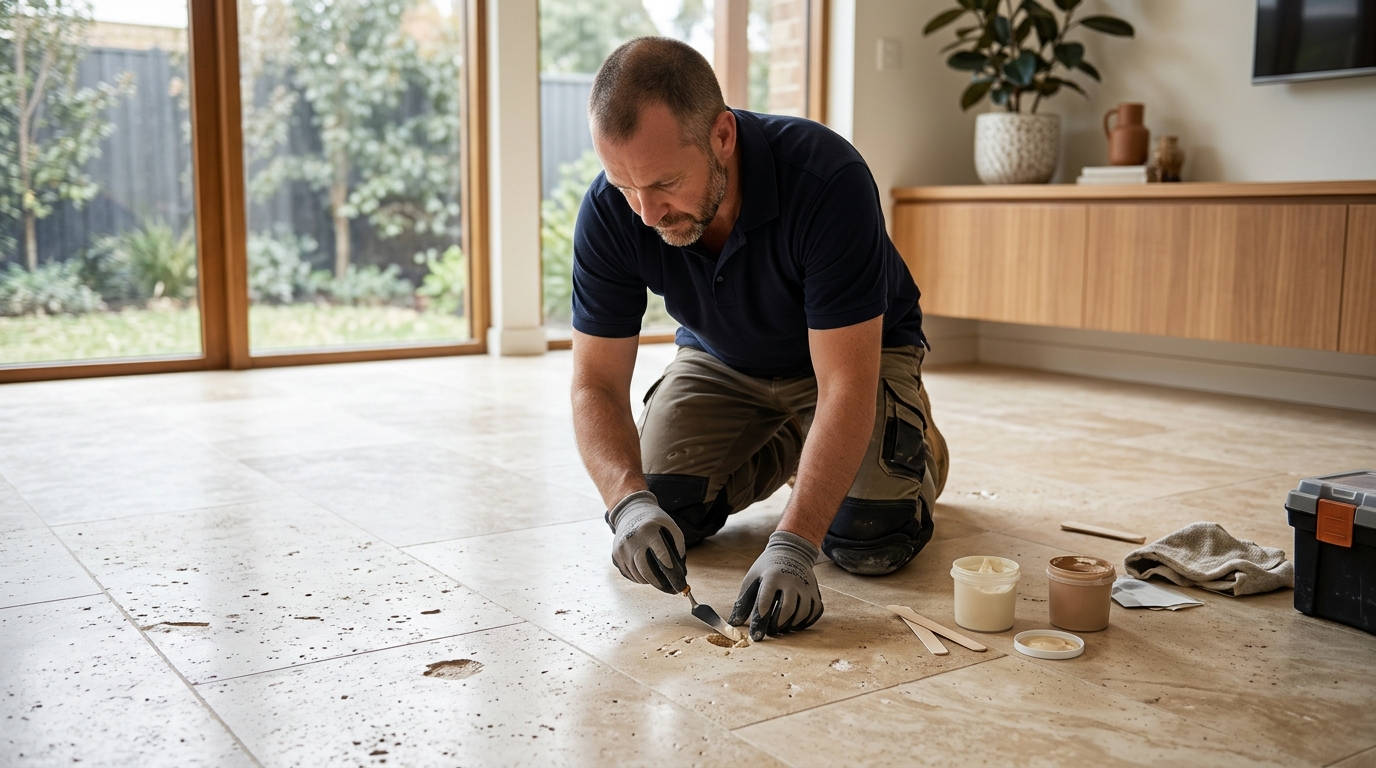
Infinity Flooring has been restoring natural stone since 2010, and we’re proudly WA-owned and operated from our base in Balcatta. We’ll inspect your floor, explain what’s causing the holes and give you a fixed-price written quote with no obligation. From filling and repairs to honing, polishing and sealing, our team handles the entire job.
Book your free on-site inspection online or call our friendly team today.
FAQs
Will sealer fill the holes in my travertine?
No. Penetrating sealers soak into the stone to resist stains, but they can’t fill pits or voids. Holes need filling first, then sealing once the filler cures.
Do holes in travertine get bigger if left unfilled?
Often, yes. Open edges chip under foot traffic and trapped grit wears them wider. Filling them early keeps repairs smaller, simpler and less noticeable.
Can you fill travertine holes with grout?
Yes, sanded grout suits small pits in tumbled or unfilled travertine. Larger voids in honed or polished tiles need resin filler, which bonds better and polishes cleanly.
Why are the holes in my travertine turning black?
Open holes trap dirt, grease and moisture, and damp spots can grow mould. A deep clean removes the buildup, while filling and sealing stops it from returning.
Should you fill holes in travertine around a pool?
Usually, yes. Open pits around pools collect water, leaves and grime, which invites mould. Filling with grout makes pavers easier to clean, and tumbled surfaces keep most of their texture.