
How to Seal Travertine Tile: Expert Tips for Every Step
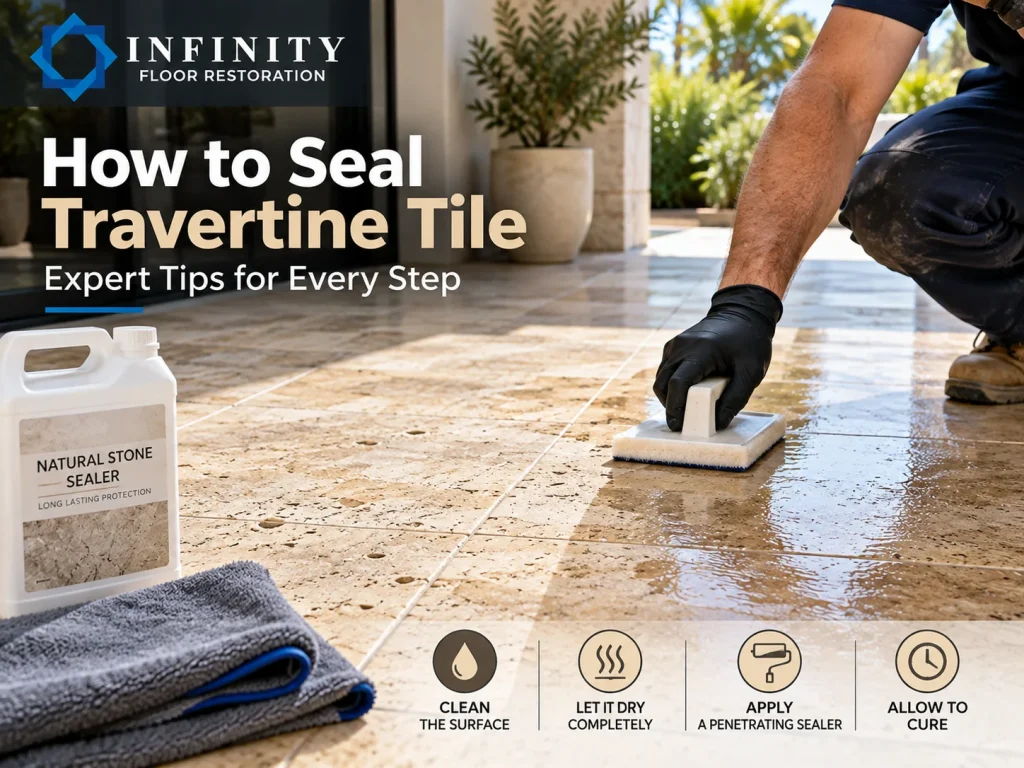
Table of Contents
To seal travertine tile, clean the surface well, let it dry completely, then apply a good penetrating sealer evenly and give it time to soak in and cure. Most travertine needs resealing every 1–2 years to stay protected. Travertine tiles bring natural elegance to floors and other surfaces, but without regular sealing, they can dull down and become more prone to stains, scratches, and general wear.
At Infinity Flooring, we’ve helped homeowners, business owners, and property managers across Perth protect their travertine with expert sealing, cleaning, and maintenance. This guide walks through why sealing matters, when to reseal, how to prep your tiles, the actual steps for applying sealer, how to look after the surface once it’s done, mistakes worth avoiding, and when it makes more sense to call in a pro.
Want your travertine tiles looking their best for years to come? Let’s get started.
Why Go for Travertine Sealing
Travertine is a type of limestone that forms in hot springs. It comes in white, cream, and buff tones, and some varieties lean more rusty. The stone is full of naturally occurring holes, usually filled in with grout or cement, and that’s what gives it its fibrous, concentric look.
Those pores are also why travertine does best with a breathable, penetrating sealer. Left unsealed, it soaks up liquids, dirt, and grime far too easily, and over time that can mean stains, mould, or even damage to the stone itself. A good seal puts a barrier between the stone and all of that, and it brings out the stone’s natural colour in the process.
There’s another reason to seal it: once travertine stains, it’s not always easy to get the stain back out, since the stone is chemically sensitive. A few of the main benefits of keeping it sealed:
Benefit | Description |
Stain resistance | Prevents spills from penetrating the surface. |
Easier maintenance | Sealed travertine is easier to clean. |
Durability | Reduces the risk of scratches and chips. |
Enhanced appearance | Bring out the natural colours and textures of travertine. |
With that covered, here are some of the questions people usually ask about sealing travertine.
When to Seal Travertine?
New tiles need their first seal right after installation, before foot traffic or moisture gets to them.
After that, plan on resealing every 1–2 years, though this can shift a bit depending on your household.
A few things that affect how often you’ll need to reseal:
- High-traffic areas (e.g., kitchens, hallways, and bathrooms)
- Outdoor exposure to weather
- Regular cleaning with harsh chemicals
- Being close to a pool or the coast, where Spirit Premium Consolidator can help protect tiles from saltwater corrosion
Signs that Travertine Requires Sealing
Watch for these signs that your old sealer’s wearing off, and get ahead of it before the damage sets in.
- Dullness and colour changes
- Easy staining
- Dirt and grime building up
- Water no longer beading on the surface
- A worn look overall
- Corrosion or weathering, like cracks, flaking, or chipping
- A white, powdery residue on the surface
Even without any of these signs showing up yet, it’s worth sealing anyway, just to keep the stone looking good and lasting longer.
Preparation Before Travertine Sealing | Cleaning & Grout Haze Removal
Getting the tiles properly prepped is what makes a sealing job actually last. Skip this part, and you’ll likely end up with patchy sealing or protection that wears off fast.
- Clean the surface thoroughly and get rid of every stain, so it looks as clear as you want before sealing.
- Sweep or vacuum first to clear off dirt, dust, or debris, whether you’re working on a travertine floor or another tile surface.
- Mix spirit cleaner with water at a 1:20 ratio in a bucket, then mop or broom it onto the floor.
- Give the solution 2–3 minutes to sit. Top it up with a bit more cleaner if it’s drying out fast, and work through the tiles section by section.
- A pH-neutral stone cleaner is what you want here. Skip acidic or abrasive cleaners, since they’ll damage the stone.
- Strip off any old coatings first, whether that’s wax, grout haze, or a topical sealer, before laying down the new one.
- Give the surface a scrub so the new sealer has something to grip onto.
- Make sure it’s completely dry before you seal. Sealing over damp travertine tends to cause cloudiness and mildew down the line.
Once that’s done, your travertine is ready to be sealed.
How to Apply the Travertine Seal: 10 Simple Steps
Sealing itself isn’t complicated once you know the order of operations. Here’s how to get even coverage without wasting product.
- Start with a good penetrating sealant made for natural stone. Water-based, low-odour products tend to work best indoors. Premium Impregnating Sealer is one option, with 5 litres covering roughly 20–25 m². If you’re unsure which to pick, an expert like Infinity Flooring can point you in the right direction.
- Try it on a small, out-of-the-way spot first and leave it 24 hours to settle. Every batch of travertine behaves a little differently, so a test patch tells you whether the product suits your stone, how it looks once dry, and whether it works with a polished finish, if that’s what you’ve got.
- Apply it with a clean microfiber cloth or applicator pad. A brush, sprayer, cotton towel, sponge, or cloth pad all work fine too, and for bigger floors, a roller speeds things up.
- Keep the layer thin and even, and work in smaller sections at a time so you don’t leave streaks or gaps.
- Let the first coat sit for 15–30 minutes so it can soak in properly. If your product needs a second coat, apply it now, since two coats generally hold up better. AQUA-SEAL GOLD+®, for example, needs two for full stain resistance, and ENHANCE’N’SEAL also needs two, though it darkens the stone slightly.
- Not seeing any absorption after about 5 minutes? Blot it up with a paper towel or a microfiber cloth.
- Give the final coat at least 3–4 hours before touching the surface again.
- Wipe off any leftover sealer with a dry cloth once you’re done, so it doesn’t turn sticky on the tiles.
- Stay off the area for 24–48 hours while it cures fully. Rush this step, and the seal won’t hold properly.
- A few drops of water tell you if it worked. If the water just sits there instead of soaking in or darkening the stone, you’re good to go.
That’s not quite the end of it, though. Travertine still needs a bit of ongoing care after sealing.
Post-Sealing Maintenance Tips
A little upkeep goes a long way toward keeping your travertine looking sharp and making the sealant last.
- Use pH-neutral, gentle cleaners made for sealed stone, so you’re not stripping the sealant every time you clean.
- Mop up spills as soon as they happen. Sealed or not, travertine can still absorb liquid if it sits too long, and acidic spills especially can etch the surface.
- Watch out for coloured liquids like red wine, juice, soda, oil, or paint, since they can darken the surface or leave patchy marks.
- A microfiber mop used regularly keeps dust and debris from piling up and stretches out the time between sealings.
- Rugs or mats in busy spots help protect the sealant from everyday wear.
- Skip the harsh scrubbing. A soft cloth or mop does the job better than anything abrasive, and rinse-free products can make routine cleaning even easier.
Stick with these habits, and steer clear of the mistakes people commonly make when sealing travertine.
8 Common Mistakes to Avoid While Cleaning & Sealing Travertine
Small mistakes here can undo a lot of the work you’ve put in. Watch out for these.
Skipping cleaning
Skipping the pre-clean means any dirt or stains get sealed right in, permanently.
Sealing wet tiles
Sealing over wet tiles traps moisture underneath, and that can lead to stains, discolouration, cloudiness, or mildew.
Using the wrong sealant
Not every sealant works for travertine, so pick carefully. A quality sealer from a trusted brand should block both moisture and staining. Steer clear of topical sealers on wet-area travertine floors especially, since they tend to get slippery.
Over-applying the sealer
Piling on more sealer doesn’t mean better protection. It can actually mess with the tile’s texture, so keep it thin.
Thinking one application is enough
One seal doesn’t last forever, no matter how it looks at first. Travertine needs resealing periodically to hold onto its shine and durability.
Harsh and acidic cleaners
Bleach, ammonia, and vinegar are all off the table for sealed travertine. Like marble, it’s a calcium-based stone, and these products will scratch and dull it.
Scrubbing and high-pressure cleaning
Hard scrubbing or high-pressure water can force dirt and moisture deep into the stone’s pores. A soft cloth or brush is the safer bet.
Delaying the spill wipe
Even sealed, spills shouldn’t sit around. The longer they’re left, especially rust, the harder they get to shift.
Need Help in Sealing Travertine Tiles in Your Home?
Get Expert Travertine Sealing with Infinity Flooring
At Infinity Flooring, we take care of your floors with professional travertine stripping and sealing, so you know the jobs in good hands.
With more than 15 years behind us and a skilled team on every job, we handle everything from cleaning and prep through to sealing and finishing, covering pretty much any restoration need your floor might have.
Whether it’s older travertine that needs restoring or brand-new tiles ready for their first seal, we’ve got you covered, including pre-sealing for new installations. A pre-sealer can go down before grouting where needed, and a second coat helps with any grout haze left behind. Get in touch with Infinity Flooring to find out more about sealing and keeping your travertine looking good for years to come.