
Terrazzo Floor Restoration, Polishing & Cleaning Guide
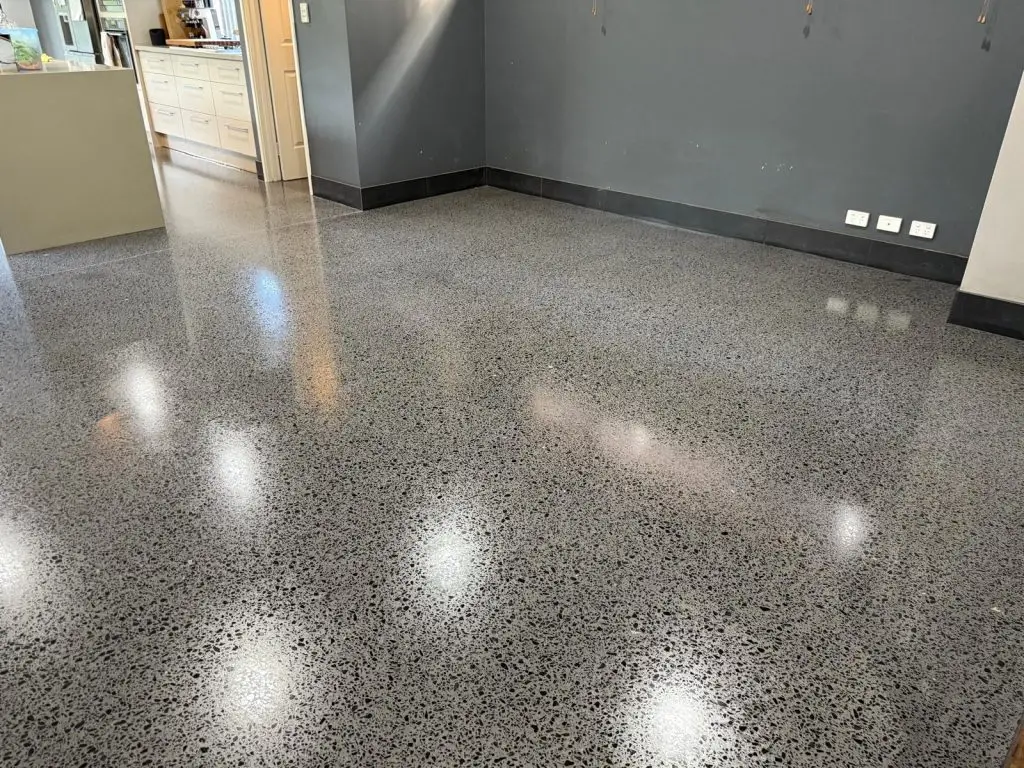
Terrazzo floor restoration is a staged process: assess and repair the floor, grind away scratches and old coatings with diamond abrasives, polish through finer grits, then seal and maintain it. Light dullness can sometimes be improved with a deep clean. Chips, etching and worn sealer need professional work.
- Signs you need restoration: a dull surface, scratches, stains, chips and a sealer that no longer repels water.
- The process: grinding, polishing, sealing, in that order.
- Repairs: chips and small cracks can usually be filled before polishing.
- Aftercare: daily dust mopping and a pH-neutral cleaner.
Terrazzo floors are known for their mosaic-like look and tough construction. They are made from chips of marble, quartz, granite or glass set in cement or resin, then ground and polished to a smooth finish. Over time, even a floor this hard-wearing loses its shine. Grit builds up, fine scratches appear, and a floor that once glowed starts to look tired.
This guide explains how terrazzo floor restoration works, what each stage involves and how to look after the floor afterwards. Infinity Flooring is a Perth based team that restores, cleans, polishes and seals terrazzo and other natural stone, so the process below reflects how a professional approaches the job in Perth homes and commercial spaces.
The Need for Terrazzo Floor Restoration
Terrazzo is strong, but it is not maintenance free. Foot traffic, grit, spills and cleaning products slowly wear the surface. The sealer thins out, and the exposed chips and aggregate can make the floor look patchy. Once the sealer is gone, the floor absorbs stains and moisture more easily.
These are the common signs that a terrazzo floor needs professional help:
- A faded or dull surface that no longer reflects light
- Visible scratches and scuff marks, especially in high-use areas
- Discoloured patches or stains from spills or moisture
- Cracked or chipped sections that can catch a foot or a chair leg
- Loss of the protective seal, which makes the floor harder to clean
A single sign, such as light dullness, may only call for a thorough clean. Several signs together mean basic cleaning will not be enough, and a full restoration is the realistic fix.
Equipment Needed for Restoration
Restoring terrazzo is not a job for household tools. Professional machines and materials are needed to level the surface safely and control the dust. Here is what a typical restoration uses:
| Equipment | Description |
|---|---|
| Planetary floor grinders | These machines use diamond-embedded discs to grind down the surface layer of terrazzo. |
| Metal-bond diamond pads | Used to remove old sealers, scratches and surface grime. |
| Resin-bond diamond pads | Gradually smooth the surface and bring out a glossy finish. |
| Buffing machines | Used near the end to lift the floor's shine. |
| Solvent or water-based sealers | Applied to protect the polished floor from stains and wear. |
| Microfibre applicators | Allow smooth, even application of the sealer. |
| HEPA-filtered vacuums | Keep dust under control during grinding and polishing. |
| Neutral pH cleaners | Used to clean the surface without harming the finish. |
The Process of Restoring Terrazzo Floors
Restoring terrazzo is a multi-step job, and each stage prepares the floor for the next. Here is how the work is normally carried out.
1. Grinding: Level and Smooth the Surface
Grinding is the most labour-intensive stage. Coarse diamond abrasives remove the top damaged layer, which clears away stains, etching, scratches and leftover sealer. The aim is to take off as little material as the damage allows.
- Initial assessment to find deep scratches, uneven areas and any loose sections
- Grinding in progressive stages, typically with 30, 70 and 120 grit diamonds
- Levelling of high and low spots for a uniform surface
- Dust collection with industrial vacuums to keep the site clean
Any chips or cracks are usually filled during this stage so the repair can be ground flush with the rest of the floor.
2. Polishing: Restore the Natural Shine
Once grinding is finished, the floor moves to finer polishing pads. The grits typically step up from about 200 to 3000, depending on the gloss level wanted. This is the stage that brings out the colour of the marble, quartz or glass chips. For the professional service, see our terrazzo polishing page.
- Dry or wet polishing, depending on the type of terrazzo
- Layer-by-layer buffing to draw out the natural colours and patterns
- Optional densifiers to harden the surface and increase shine
- A spot check for uniformity, with extra polishing where needed
A higher gloss looks striking, but it can also feel slicker underfoot, especially when wet. In entrances, bathrooms and other damp areas, a slightly lower sheen or an anti-slip floor treatment is worth considering.
3. Sealing: Long-Term Protection
A polished floor needs protection to stay that way. The job finishes with a professional-grade sealer that guards against stains, moisture and wear. You can read more about how terrazzo sealing works in our separate guide.
- Penetrating sealers to reduce water absorption
- Topical sealers for added gloss and protection in commercial settings
- Slip-resistant options for wet environments
- Final buffing and cure time before the floor can be walked on
The sealer needs to be applied evenly and left to absorb fully. Follow the maker's instructions for cure times, and keep foot traffic off the floor until it is ready.
Can Cracked or Chipped Terrazzo Be Repaired?
Yes, in most cases. Chips and small cracks in terrazzo can usually be filled, ground flush and polished so they blend into the floor. Whether a repair is enough, or the whole floor needs restoring, depends on the cause and how widespread the damage is.
Chips and small holes
Chips often come from dropped objects, heavy furniture or an old repair that has failed. The damaged area is cleaned out, then filled with a tinted epoxy or a resin and chip mix chosen to match the surrounding terrazzo. Once cured, the patch is ground level and polished with the rest of the floor.
Cracks
Hairline cracks are common in cement-based terrazzo and often follow the slab underneath. Fine cracks can be filled with epoxy and polished over. If a crack keeps returning, the floor underneath may be moving, and filling it will only be a short-term fix. A hollow sound when tapped can also point to a section that has lifted from its base. That needs assessing before any polishing starts.
When repair is not enough
Spot repairs work best on a floor that is otherwise in good shape. If the surface is dull, scratched and stained all over, repairing a few chips and leaving the rest will look uneven. In that case it makes sense to repair and restore together.
Maintenance Tips for Long-Term Benefits
Once a terrazzo floor has been restored, a few simple habits keep it looking good and stretch the time between restorations. For a wider look at stone care, see our guide on how to care for your natural stone floor.
Daily Maintenance
- Dust mop daily to remove grit and loose particles
- Wipe up spills straight away to prevent staining
Weekly Maintenance
- Use a pH-neutral cleaner and a damp mop for routine cleaning
- Avoid harsh products such as bleach, and acidic ones such as vinegar, which can etch the surface
Monthly to Quarterly Care
- Buff the floor lightly to maintain the shine, using a soft pad suited to sealed terrazzo
- Inspect for wear and spot-clean as needed
Annual Maintenance
- Professional re-polishing may be needed, depending on traffic
- Re-sealing every 1 to 2 years is a common guide for keeping water and stain resistance, though it varies with traffic and the sealer used
Why Professional Restoration Is Usually the Safer Choice
DIY restoration sounds tempting, but terrazzo is a layered material with a cement or resin base and stone chips. It can be damaged by the wrong abrasive, the wrong chemical or too much pressure in one spot. Here is why a specialist is usually the safer choice.
- Knowing the material: cement-based and resin-based terrazzo behave differently, so pads, sealers and methods are chosen to suit.
- A consistent finish: a full grit ladder on commercial machines gives a more even shine than off-the-shelf polishes.
- Fewer costly mistakes: over-grinding, burning through a sealer or using the wrong filler is hard to reverse.
- Dust control: extracted machines keep mess down in homes, shops and offices.
Terrazzo Floor Restoration FAQs
How do you restore old terrazzo floors?
Old terrazzo floors are restored by grinding off worn surface material and old coatings, repairing damage, polishing through finer grits and then sealing. The starting point depends on the floor's age, its condition and whether it is cement or resin based. A terrazzo specialist in Perth normally inspects the floor first to choose the starting grit. However, floors with loose or hollow sections may need base repairs before any polishing begins.
How do you strip terrazzo floors?
Stripping terrazzo means removing old wax, sealer or coatings, using a remover suited to the coating and then mechanical removal with diamond pads if needed. The right method depends on what was applied. Strong chemical strippers can harm cement-based terrazzo and marble chips, so follow the product instructions and test a hidden spot first. Floors with several unknown layers are often easier for a professional to assess.
Does epoxy work for terrazzo repairs?
Yes, epoxy is widely used to fill chips and small cracks in terrazzo, usually tinted to match the stone and then ground flush. How well it works depends on the colour match and on why the damage happened. Cracks caused by movement in the slab can reopen. Hardware store kits rarely match aged terrazzo closely, so a test patch in a hidden corner is sensible.
What does grinding terrazzo involve?
Grinding terrazzo removes a thin surface layer with diamond abrasives to level the floor and clear scratches, etching and old coatings. It is done in stages from coarse to fine grits, with dust extraction running throughout. Terrazzo toppings have limited thickness, so only as much material as necessary should be removed. A floor that has been ground heavily before may have less depth to work with.
Can you buff terrazzo yourself?
You can lightly buff sealed terrazzo yourself using a low-speed floor buffer and a soft pad, but this only refreshes the surface. It will not remove scratches, etching or deep stains. Aggressive pads or the wrong machine can leave swirl marks or wear through the sealer. Check the sealer maker's instructions and try a hidden area first. Deeply dull or damaged terrazzo usually needs diamond grinding.
How much does terrazzo restoration cost?
The cost of terrazzo restoration depends on the floor size, its condition, the type of terrazzo, how much repair is needed, the number of grinding and polishing stages, and site access. Two floors of the same size can need very different work, so pricing is normally set after an inspection. Infinity Flooring offers free on-site quotes in Perth. Online per-square-metre figures can mislead without seeing the floor.
How do you maintain terrazzo after restoration?
Maintain restored terrazzo by dust mopping often, wiping spills quickly and washing with a pH-neutral cleaner rather than acidic or harsh products. Entry mats and felt pads under furniture cut down on grit and scratches. Sealer wears fastest in busy areas, so watch for water soaking in rather than beading. If that happens, the floor may be due for re-sealing or re-polishing.
Get Expert Terrazzo Floor Restoration with Infinity Flooring
At Infinity Flooring, we restore, clean, polish and seal terrazzo and other natural stone across Perth. That includes grinding, honing, polishing, refinishing and repairs, for homes, offices and commercial properties.
Not sure whether your floor needs a clean, a repair or a full restoration? We offer free on-site quotes. Request a quote or call us on 08 9468 0798. You can also see the details of our terrazzo restoration services.