
Why Does a Granite Floor Look Dull After Cleaning? Causes and Fixes
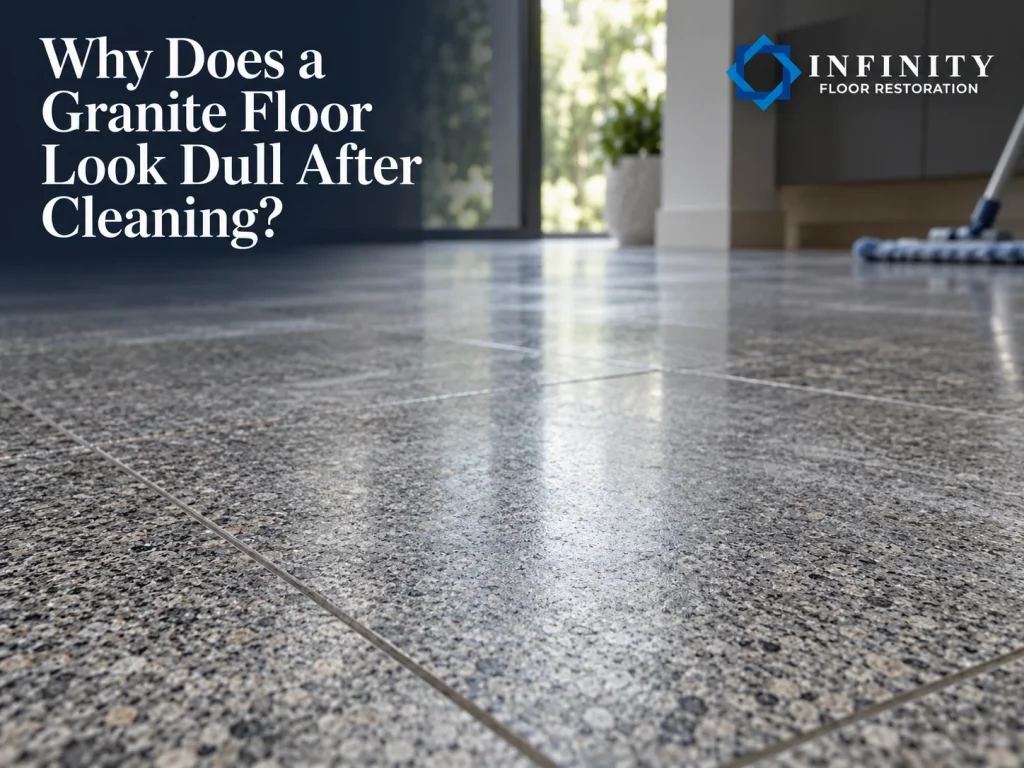
Table of Contents
You’ve just finished mopping. The floor is spotless. But it still looks flat, hazy, almost lifeless under the light. Sound familiar?
Let us tell you something: a “dull” granite floor isn’t always a dirty one. Cleaning only lifts surface grime. It can’t fix a scratched, worn, or residue-coated surface. That’s a completely different job, and it’s why you scrub harder, buy stronger chemicals, and still end up frustrated. Don’t worry more!
Because in this guide, we are going to explain why your granite floor lost its shine and how to get it back, without wasting money on the wrong fix.
What Causes a Granite Floor to Look Dull After Cleaning?
Granite’s shine comes from a perfectly flat, reflective surface. Anything that disrupts that flatness, whether it’s a film, a scratch, or worn stone, scatters light instead of reflecting it. That’s what reads to your eye as “dull.”
Soap and Cleaner Residue
Regular household cleaners leave a film behind, and that film is what’s dulling your floor. Dish soap, scented mopping liquids, and general-purpose sprays all contain surfactants that don’t fully evaporate. Every mop leaves a fine layer. Mop again next week, and it layers up further.
Eventually, this builds into a cloudy coating that grabs dust and blocks the natural reflection underneath. You’re not seeing dirt. You’re seeing soap.
Hard Water and Mineral Deposits
Hard tap water leaves mineral salts behind as it dries, and that’s what causes the chalky haze. Calcium, magnesium, and silica don’t evaporate with the water. They stay put.
Over time, this shows up as:
- Whitish, cloudy patches
- Faint rings near sinks or wet zones
- A gritty feel underfoot in bad cases
Mopping again with more water just adds more minerals. It won’t undo the buildup.
Abrasive Dirt and Foot Traffic
Sand and grit tracked in on shoes act like sandpaper, and every step grinds it deeper into the stone. Granite is tough, rated 6 to 7 on the Mohs scale, but it’s not immune to constant abrasion.
Entryways, hallways, and kitchen walk zones cop the worst of it. Over months and years, that traffic wears a visible dull path into an otherwise glossy floor.
The Polished Finish Has Worn Away
Once the polished finish is physically worn down, no cleaning product will bring it back. That mirror shine wasn’t sprayed on. It was ground into the stone through a mechanical process, gradually building a flat, light-reflecting surface.
When foot traffic erodes that microscopic flat plane, you’re not dealing with dirt anymore. You’re dealing with physical wear, and that only responds to proper granite refinishing or polishing.
Previous Cleaners, Wax or Treatments
Wax and acrylic “shine” products often don’t bond well to granite, and this can be a real contributor to patchy dullness. Granite is dense and largely non-porous, so topical coatings meant for vinyl or timber tend to sit on top rather than soaking in.
Over time, these coatings can yellow, scuff unevenly, or flake, trapping dirt underneath and creating a hazy, blotchy look that’s genuinely hard to explain until you know what caused it.
The Granite Has a Honed Finish
Not every granite floor is meant to be glossy, and a honed finish is often mistaken for a dull one. Honed granite is deliberately finished with a lower grit to give a soft, satin, matte look. If your floor has always looked this way, it’s a design choice, not a fault.
Does Your Granite Floor Need Cleaning, Polishing or Restoration?
Once you know what’s causing the dullness, matching it to the right treatment is straightforward. Use the table below as a quick diagnostic guide before moving to any fix.
What You Notice | Likely Cause | Recommended Solution |
Cloudy film straight after mopping | Soap or cleaner residue | Deep clean and strip |
Chalky white patches near wet areas | Hard water mineral deposits | Non-acidic deposit removal |
Dull haze along walkways, no gouges | Fine scratch wear from grit | Granite floor polishing |
Deep scratches or uneven edges | Structural wear or lippage | Diamond grinding or honing |
Chips, cracks, missing grout | Impact or building movement | Resin repair |
Ongoing dullness, patchy look | Failed coatings, deep wear | Full granite restoration |
How to Restore Shine to a Dull Granite Floor
The right fix depends entirely on what’s actually causing the dullness. Here’s a general idea of what each treatment involves.
Deep Clean the Granite Floor
If the cause is everyday grime or light residue, a proper stone-safe deep clean is often enough. This means pH-neutral cleaners and, where needed, more thorough extraction methods to lift embedded dirt from pores and grout without damaging the stone itself.
Remove Mineral and Product Build-Up
Old wax, acrylic coatings, or heavy soap scum need a stone-safe stripper, not more mopping. For hard water scale, a non-acidic mineral remover clears the chalky haze without compromising the surface.
Polish Granite to Restore Its Shine
When the dullness is light, from fine surface scratches or traffic wear, polishing granite floor surfaces usually solves it. This is a specialist job involving diamond-based equipment and stone-specific compounds, and it’s the most common fix for floors that were shiny once and have simply worn down.
The same principle applies to granite tile polishing on benchtops and other surfaces. If you’re dealing with dull benchtops alongside your floor, we’ve covered that separately in how to polish granite benchtops.
Hone or Grind the Granite Surface
Deeper scratches, lippage, or heavier structural wear need more than polishing. This calls for diamond grinding to flatten the surface before any polish goes near it, a job best left to trained technicians.
Repair Chips, Cracks and Surface Damage
Chips and cracks need to be filled before polishing, not after. Colour-matched resin, properly cured and finished flush, allows repairs to blend into the surrounding stone rather than standing out.
Seal the Granite After Restoration
Once restored, granite may be sealed where appropriate to help protect the surface from future staining and moisture. Sealing is a protective step, not a shine fix. It won’t restore lost gloss on its own, but it does help maintain the results once the real work is done.
Prevent Your Granite Floor from Becoming Dull Again
A restored floor stays shiny longer with a few consistent habits. Stick to a pH-neutral stone cleaner and avoid harsh, unsuitable products, since these can leave residue, wear down sealers, or affect the surface over time. Use cleaning products only as directed, since too much concentrate leaves more residue behind than it removes.
Beyond that, it comes down to routine:
- Dust-mop regularly to stop grit from grinding micro-scratches into the surface
- Use entry mats at doorways to catch sand and dirt before it reaches the granite
- Wipe up spills promptly, especially water, oils, and citrus, to avoid mineral marks and grout staining
Small habits, repeated consistently, do more for a granite floor’s shine than any single deep clean.
Get Granite Floor Restoration Services in Perth From Infinity Flooring
At Infinity Flooring, we work with granite floors across Perth and the surrounding areas, and the right fix genuinely varies from floor to floor. Some need nothing more than the residue stripped back. Others need grinding and repolishing to bring the shine back properly.
Our approach starts with assessing the actual condition of the stone before recommending anything, whether that’s a straightforward clean, a full granite floor polishing service, or complete diamond grinding and resealing. If your floor falls into the “nothing seems to fix it” category, our Granite Restoration, Cleaning & Polishing service is built specifically for that.
And if you’ve got other natural stones like marble, limestone or travertine, our natural stone restoration, cleaning and polishing service can help restore, clean and polish these surfaces too.
Ready to bring your granite floor back to life?
If your floor still looks dull after cleaning, it’s worth getting an honest opinion before you spend more time or money on the wrong fix.
Infinity Flooring can assess your granite and recommend a treatment that actually matches its condition, not a one-size-fits-all service.
Get a Granite Floor Assessment
FAQs
Can you make a granite floor shiny again without professional help?
Light haze from soap residue, yes. But worn or scratched granite needs specialist polishing equipment, which isn’t practical or safe for DIY use.
How often should a granite floor be professionally polished?
There’s no fixed schedule. It depends on foot traffic, cleaning habits, and how quickly the surface shows wear in high-use areas.
Why does my granite floor look dull only in certain spots?
Localised dullness usually means traffic wear, not residue. Entryways, hallways, and kitchen walkways wear faster than low-traffic areas nearby.
Will resealing granite fix a dull, hazy floor?
Only if the haze is from moisture absorption, not scratches or residue. Sealing protects the surface; it doesn’t restore lost shine.
Is honed granite the same as dull, worn granite?
No. Honed granite is intentionally matte from the factory. Worn granite has lost its shine over time and can often be repolished.